Carbon Capture vs Carbon Removal: What's the Difference?
Understand the key differences between carbon capture and carbon removal — and why both are essential for net zero.
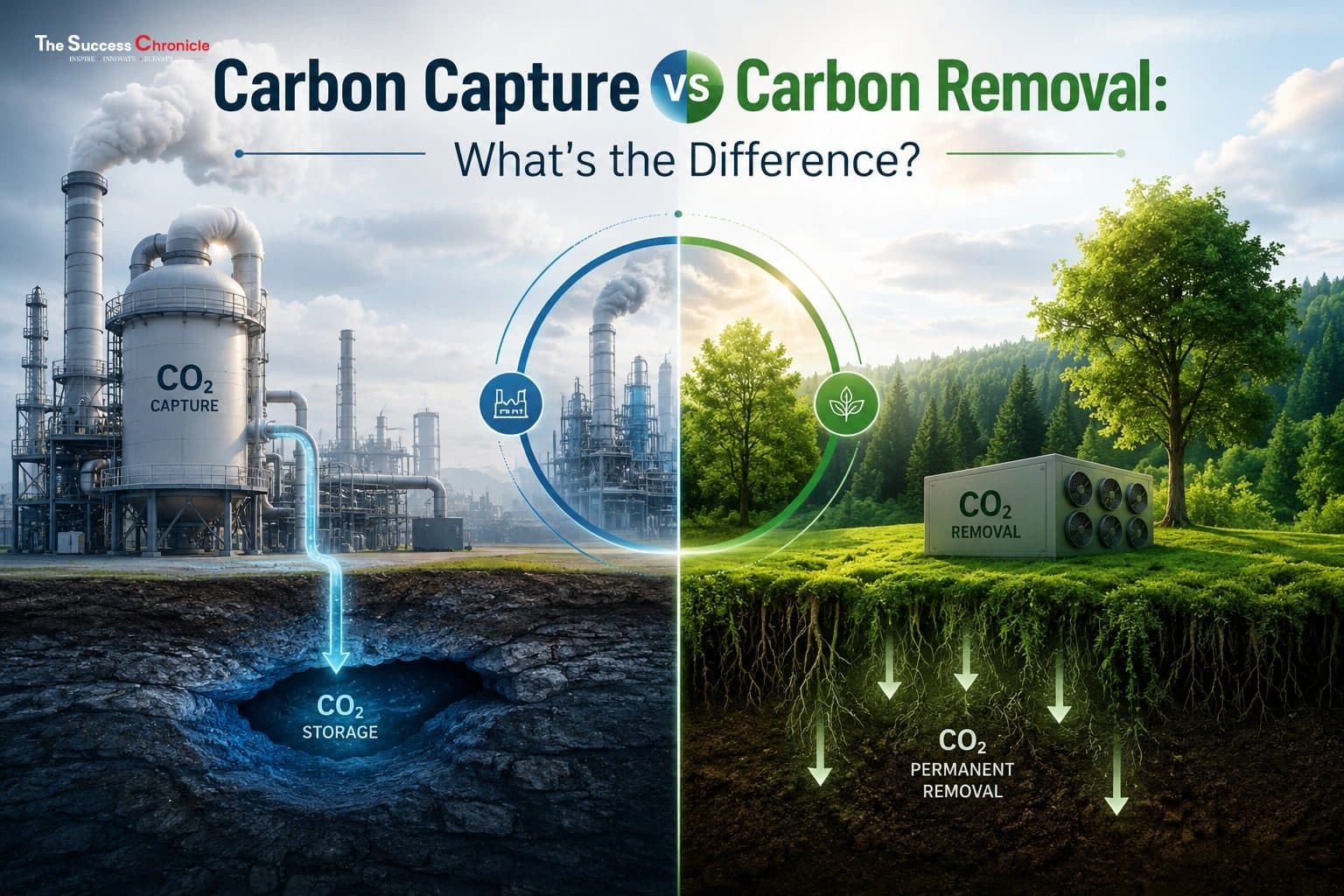
The world is facing a climate challenge that cannot be solved only by cutting future emissions. Although countries have committed to Net Zero goals, their emissions continue to increase annually. The two technologies getting the spotlight are carbon capture and carbon removal — and they address two distinct problems.
Carbon capture prevents additional CO2 from being released into the atmosphere. Carbon removal pulls existing CO2 back out of it. Governments and companies are investing billions of dollars in both these methods, and understanding the two is important for tracking the direction of climate technology.
What Is Carbon Capture?
Carbon capture traps CO2 before it escapes from a factory or power plant using special equipment to remove the CO2 from other emissions at the point of origin. The captured CO2 is then compressed and piped — it can be either stored deep underground or used for other products. The process is known as carbon capture and storage (CCS), and the use of captured CO2 to create fuels, chemicals, or materials is widely known as carbon capture, utilization, and storage (CCUS).
Heavy industries are among the largest consumers of this technology, as a large portion of their emissions originate from processes that are difficult to replace — cement plants, steel blast furnaces, fertilizer manufacturers, and oil and gas firms are all turning to capture systems to cut emissions while maintaining production.
What Is Carbon Removal?
Carbon removal takes a completely different approach. Instead of stopping new emissions, it pulls out CO2 already sitting in the atmosphere, creating what scientists call negative emissions — actively reducing the total carbon already causing warming today.
Direct Air Capture (DAC) uses machines to filter CO2 directly from the open air. Reforestation restores forests that absorb and store carbon over time, while biochar converts agricultural waste into a stable form of carbon that can remain in soil for years. Enhanced weathering and ocean-based approaches round out the toolkit, each differing in cost, scale, and time to results.
The Key Differences
Carbon capture acts like a filter placed at the exit point — it stops fresh pollution before it ever reaches the sky. Carbon removal works more like cleanup, taking out what is already there, which makes it useful even for emissions released decades ago.
Both technologies serve different stages of the same problem. Capture is essential for industries that still burn fossil fuels directly. Removal becomes necessary once emissions cannot be cut any further. Most climate plans now need both tools working side by side.
Why Both Technologies Are Essential for Net Zero
The IPCC has been clear on this point for years: emission cuts alone cannot achieve net zero. Aviation still depends heavily on liquid fuel for long-haul flights, shipping faces similar limits, and cement and steel production release CO2 through chemical reactions, not just fuel burning.
This is why both approaches now attract serious investment from governments and corporations racing to build a credible path to net zero across every hard-to-abate sector.


