How Geopolitical Tensions Are Reshaping Global Shipping Routes
Why are ships taking longer routes? Geopolitical tensions are disrupting key trade lanes, driving up shipping costs and pushing businesses to build more flexible supply chains.
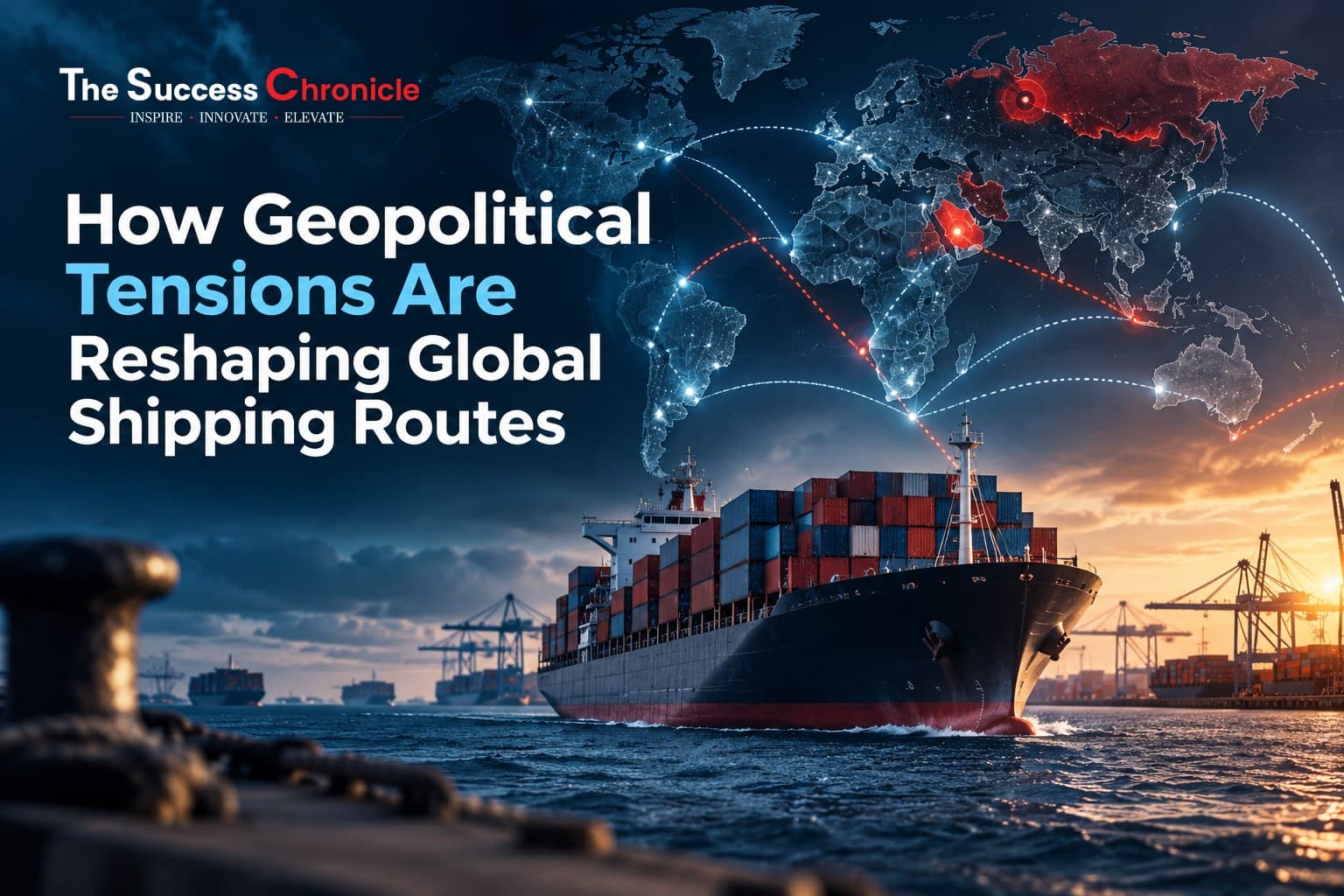
We are witnessing a rise in geopolitical tensions, with such tensions, ships have started following alternate routes around the world. They are even paying extra amount to avoid the high-risk regions.
Geopolitical issues, ranging from Red Sea to uncertainties about trade routes, are impacting the flow of goods across regions. This is creating uncertainty in shipping routes, affecting businesses around the world due to higher fuel consumption, freight rates and delivery dates.
Shipping companies have long relied on consistent network of sea routes. The Suez Canal, Panama Canal and the Strait of Hormuz have been important waterways for international commerce. But, in case if there is any conflict or political issue which can threaten these routes, shipping companies rethink their usual schedules and routes.
Red Sea Conflict Has Changed a Major Trade Route
One of the clearest examples of the impact of geopolitical tensions on international shipping is the Red Sea. The Suez Canal has been a popular route for ships between Asia and Europe as it offers a much shorter journey than going around Africa.
Security risks in and around the Red Sea have pushed many shipping companies to avoid the area. Vessels have instead been going around the Cape of Good Hope at the southern tip of Africa. This shift extends some trips by thousands of kilometres. This results in a longer journey, increased sea days and operating expenses. It may also minimize the vessel's operational cycles in a specific timeframe.
For importers and exporters, the effects can extend beyond shipping companies. Extended transit times may result in delay of raw materials, components and finished products. This could also force companies to carry larger inventories to prevent stockouts.
Panama Canal Problems Add More Pressure
Another significant part of global trade is the Panama Canal. It acts as the link between the Atlantic and the Pacific oceans and is especially important for trade between the east and west coasts of the Americas.
At present, the number of ships passing through the canal is compromised by water shortages. When capacity is decreased, shipping companies may face delays, increased booking costs or might also need to consider alternative routes.
The situation shows that global shipping routes are affected by more than military conflicts. Political decisions, climate conditions, infrastructure limits and international disputes can all influence the movement of goods.
For businesses, this makes route planning more complicated. A route that appears efficient under normal conditions may become expensive or unreliable when circumstances change.
Shipping Companies Are Rethinking Route Planning
Shipping companies have originally focused on discovering the shortest and most cost-effective routes. However, today safety and reliability are becoming equally important.
In case a particular route becomes risky, companies may also opt for a longer route even if it increases costs. This indicates that route planning is no longer simply about distance. Companies also have to look after security threats, port conditions, insurance costs, fuel prices and possible delays.
This transition is pushing companies to be aware and monitor geopolitical developments more closely. A political event in one region can quickly affect shipping schedules even if it is thousands of kilometres away.
For example, a disruption at a major maritime chokepoint can create a chain reaction. Ships may be redirected, ports may receive vessels later than expected, containers may arrive out of schedule and businesses may struggle to match supply with demand.
Higher Costs Can Reach Consumers
The implications of global shipping route changes are not limited to the big shipping firms. They can affect the cost of goods throughout the supply chain.
When ships travel longer distances, fuel costs rise. Added crew time, maintenance, insurance and port-related expenses can also increase. Shipping companies may forward some of these costs on to customers through increased freight rates.
When transportation costs rise, businesses may eventually raise their product prices. This is especially significant for industries which rely heavily on materials or components that are from other countries or regions. It can be even harder for small businesses because they may have less bargaining power with shipping providers and fewer options for changing suppliers or routes.
Companies Are Looking for More Flexible Supply Chains
In addition, the evolving geopolitical climate is driving companies to reconsider their supply chains. Numerous businesses are seeking more than one supplier, nation, or transport pathway. They're considering several suppliers and alternative shipping options.
Also, some businesses are shifting production nearer to their primary markets to prevent significant uncertainty in business. This strategy, known as nearshoring or regional manufacturing, can shorten the logistics journey for products and help minimize vulnerabilities to events in distant areas.
Keeping a buffer stock is another option. Having more inventory in stock is expensive, but it could buffer when shipments are late.
Technology Is Playing a Bigger Role
To add further, technology is playing an increasingly important role in handling unpredictable shipping conditions. The companies are leveraging tracking systems, platforms for processing data, and forecasting tools to keep track of deliveries and to determine potential delays.
Real-time visibility can assist businesses determine the location of their goods and if a route is running as expected. Businesses will be able to make quicker choices in the event of disruption regarding alternative routes, suppliers or stock.
Additionally, ports and logistics companies are investing in digital systems that aid in better scheduling and coordination. Geopolitical risks can't be eliminated by better information, but they can be acted upon faster.
The Shipping Map Is Becoming More Flexible
The most significant difference is that there is no longer a single route approach that a business can rely on all the time. Global shipping routes are becoming more flexible as companies prepare for unexpected disruptions.
The importance of major maritime chokepoints is unlikely to disappear. Suez Canal and Panama Canal and other waterways of strategic importance will still transport vast amounts of international trade. But businesses are becoming more aware of the need to be prepared for times when these routes cannot be used normally.
This implies that geopolitical factors will continue to play an important role in logistics planning. Shipping companies and businesses relying on international trade will have to take into account not just cost and speed, but security along with reliability.
With growing reliance on international trade, the ability to quickly realign shipping lanes could be one of the most critical aspects of supply chain planning. Finding the shortest path is not the only thing that will shape the future of shipping. It will rely on the ability to locate a path that can continue to transport goods in the event of a shift in the global situation.


