How Cobots Are Changing the Future of Factory Automation
Collaborative robots are bringing automation out of the cage and onto the factory floor, working alongside people instead of replacing them.
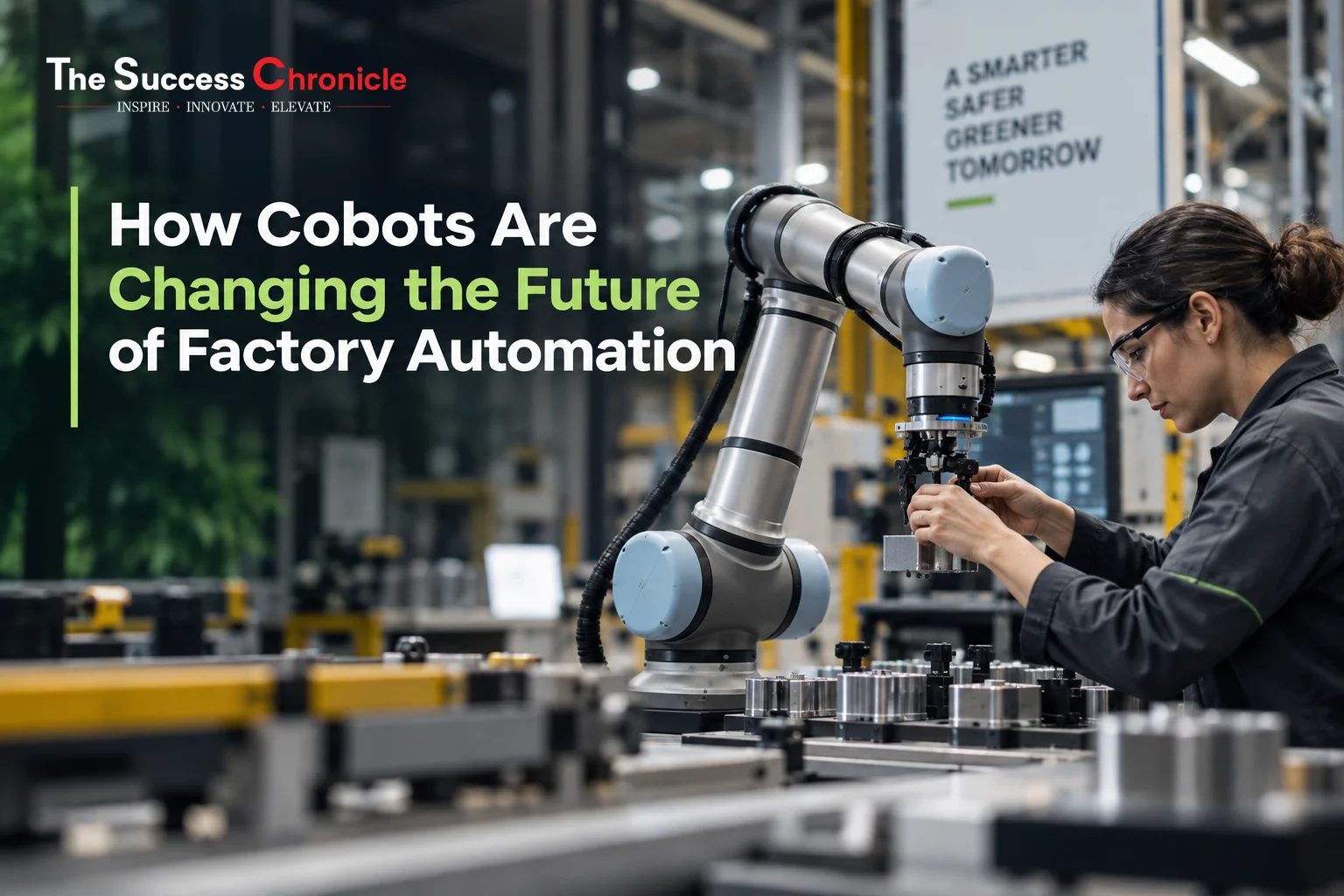
Manufacturers now look for flexible ways to improve production, and this demand is changing the process of factory automation. Factory automation is no longer restricted to large machines that work behind safety barriers. Collaborative robots, or cobots, are bringing automation closer to human workers and smaller production lines.
Cobots are intended to be used in applications alongside humans rather than replacing them like traditional industrial robots. They can perform repetitive tasks while workers concentrate on work that needs judgment, problem-solving, or manual skills. This also helps manufacturers with changing production requirements, labor shortages, and the pressure to boost productivity.
According to a report by the International Federation of Robotics (IFR), in 2023 the total number of installed industrial robots worldwide amounted to 541,302, of which 10.5 percent were cobots. The organization also reports that cobots are primarily a complement to traditional robots, and not their replacement.
What Makes Cobots Different from Traditional Robots?
High speed and repetitive production are typically performed with traditional industrial robots. They are typically found in a separate room to keep workers safe from moving equipment. Cobots take a different approach — they are intended to be used in applications where robots and humans work together in the same workspace, with the whole system operating under proper safety conditions.
Cobots also have a much simpler programming workflow than many traditional robotic systems. Some models can be controlled by hand or tablet, which can be advantageous for manufacturers who switch production tasks more frequently. As per IFR, cobots are especially suited to low-volume, high-mix production, including welding, machine tending, bin picking, and end-of-line palletizing.
However, a cobot does not automatically make every factory process safe. Risk assessment, application design, tooling, speed, force, and the surrounding work environment all matter. ISO/TS 15066 provides safety requirements for collaborative industrial robot systems and their work environments.
How Are Cobots Changing Factory Automation?
Cobots are making factory automation more flexible. Instead of installing a robot for only one fixed operation, manufacturers can use cobots across different tasks when the equipment and tooling allow it.
Assembly is one major application. Cobots can handle repetitive assembly steps, such as placing components or fastening parts, while workers manage tasks that require inspection or more complex decisions.
Other common uses include machine tending, where a cobot loads and unloads parts from machines while production equipment continues to operate, freeing up time for employees to work on other tasks. Cobots are also being employed in welding, packaging, material handling, and quality-related jobs, and can be used with various end-effectors to switch between operations. IFR considers welding, machine tending, bin picking, palletizing, painting, dispensing, and assembly to be growing application areas.
This can be particularly handy for small and medium sized manufacturers, where a production line might produce more than one product rather than the same product for months. When products, volumes, or processes change, cobots can help manufacturers adapt their automation more easily.
The broader robotics market is illustrative of the pace at which manufacturers are adopting automation. According to IFR, 542,000 industrial robots were installed worldwide in 2024, with Asia accounting for 74 percent of new deployments.
How Will AI Make Cobots More Useful?
The next stage of factory automation will involve connecting cobots with better sensors, machine vision, and artificial intelligence.
Today, a cobot may perform a task based on programmed instructions. Adding vision systems can help it identify objects, locate parts, and respond to changes in its workspace, and AI can take this further by helping robots interpret changing conditions and adjust their actions.
IFR has pointed to machine learning, improved sensors, vision technology, and AI as important developments for cobots — technologies that could help robots adapt better to changes in their environment and enable more flexible interaction with humans.
Recent robotics research is also working on ways to let robots receive task instructions through natural language. In one project from 2026, systems were tested that translate natural-language instructions into robot task plans which the user can edit before the system performs the task.
Still, AI will not remove the need for people on the factory floor. Workers will remain important for supervising systems, handling exceptions, maintaining equipment, and making decisions when processes do not go as planned.
What Does the Future Hold for Cobot-Powered Factories?
Cobots are unlikely to replace traditional industrial robots. Instead, both technologies will serve different purposes — traditional robots remain useful for high-speed, high-volume production, while cobots support flexible processes where human interaction is important. IFR also expects cobots to complement traditional industrial robots rather than replace them.
The challenge for manufacturers is to get the right mix of human and machine resources. Cobots can handle tasks that are repetitive, physically demanding, or very consistent, allowing employees to concentrate on tasks that require experience and judgment.
As AI, vision systems, sensors, and easier programming continue to improve, cobots could become a more common part of factory automation. Their real value will not come from simply adding more robots to factories — it will come from using them where they can make production more flexible, productive, and easier for people to manage.
In that sense, the future of factory automation may be less about replacing workers and more about giving them better tools to do their jobs.


