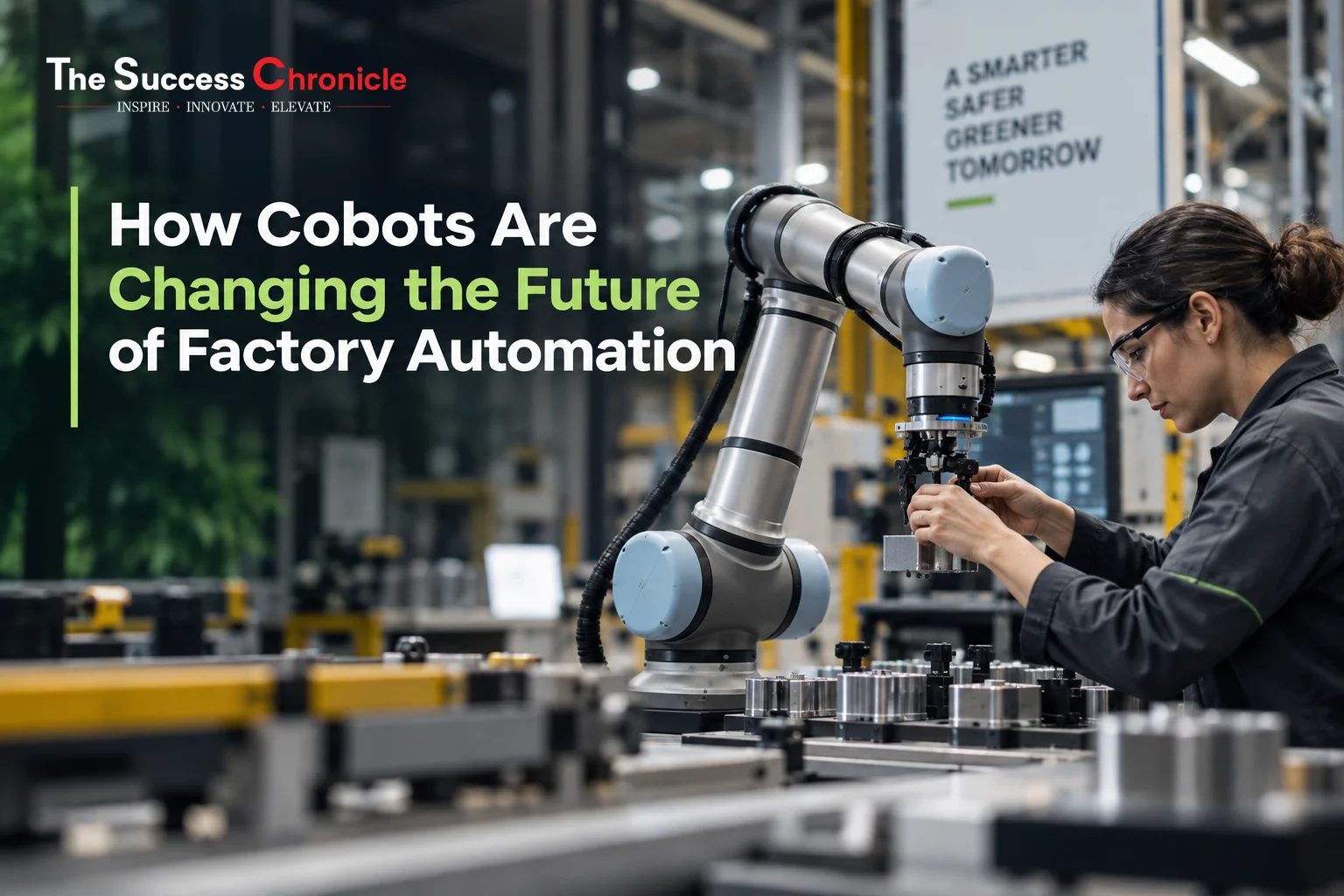
Robotics in Manufacturing: The Rise of Collaborative Machines
Cobots and autonomous robotic systems are reshaping assembly lines, improving precision, and reducing operational costs across sectors.

Industrial robotics has entered a genuinely new era, moving beyond the fixed, fenced-off machines of previous decades into flexible systems that work directly alongside human operators — reshaping how assembly lines are designed and staffed.
Cobots Redefine the Assembly Line
Collaborative robots, or cobots, are engineered with force-limiting joints and vision systems that let them share workspace safely with human colleagues — eliminating the safety cages that made traditional industrial robots impractical for smaller manufacturers or mixed human-robot workflows.
Because cobots can be reprogrammed for new tasks in a matter of hours rather than the weeks required to reconfigure traditional fixed automation, they are proving especially valuable for manufacturers running frequent product changeovers or shorter production runs.
Precision Gains Beyond Human Capability
Modern robotic systems achieve repeatability and precision — particularly in tasks like microelectronics assembly, precision welding, and surface finishing — that consistently exceeds what skilled human operators can sustain over a full shift, directly translating into lower defect rates and reduced rework costs.
The Return on Automation Investment
Falling robot hardware costs combined with rising labor costs have shortened typical payback periods for robotics investment significantly over the past several years, pulling automation projects that were previously only economical for large manufacturers within reach of small and mid-sized operations as well.